Fifa president Infantino faces mounting pressure amid divided support

Infantino’s position under scrutiny
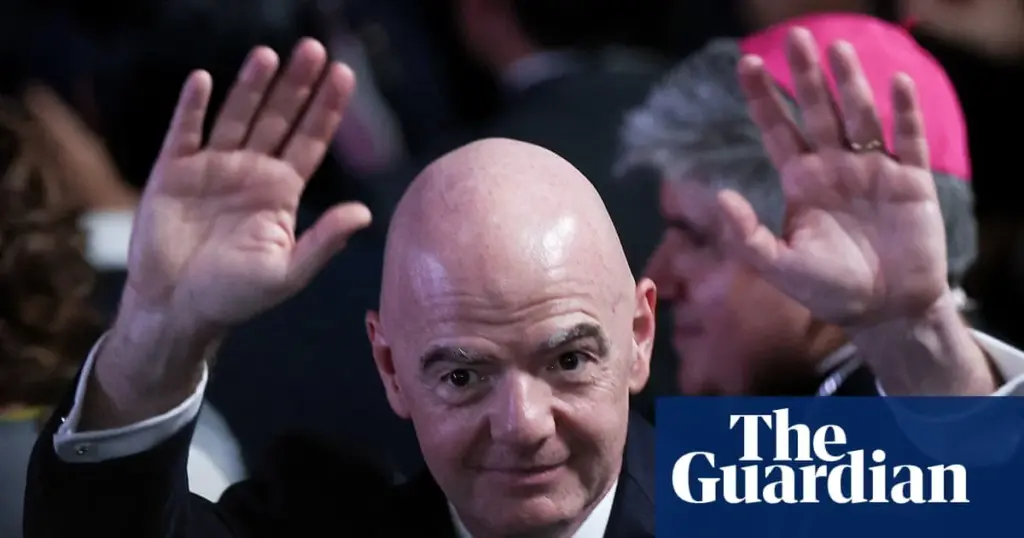
Gianni Infantino, the president of Fifa, is facing increased pressure regarding his leadership, a shift from his previously anticipated re-election for a fourth term next March. While he was once considered a certain candidate with endorsements from most of Fifa’s 210 members, the situation has changed significantly following the fallout from his abandoned plan to sell stakes in the World Cup and other competitions to private investors. This division is evident across Fifa’s member associations, with varying degrees of support and opposition.
A recent analysis indicates that 73 member associations currently support Infantino, while 124 are in opposition, and 13 remain undecided. This landscape is fluid and expected to evolve in the coming months. Historically, Infantino has been considered a strong candidate, but the recent controversy has led to a re-evaluation of his standing among global football bodies.
Several key football confederations have expressed strong reservations. Uefa (Europe), Concacaf (North America), and the Asian Football Confederation (AFC) jointly signed a letter accusing Infantino and Fifa of breaking trust through “deception.” These three confederations collectively represent 136 associations, indicating a significant coalition against the current leadership.
Shifting alliances and key regions
Despite the growing opposition, Infantino retains strong allies, particularly within Africa (Caf) and South America (Conmebol). These confederations have reportedly benefited from substantial investment since Infantino assumed leadership a decade ago. This investment, particularly through the Fifa Forward programme, which has made billions of dollars available, could be crucial in securing votes from nations in other confederations, including the AFC, Concacaf, and the Oceania Football Confederation (OFC).
However, even within confederations that have largely opposed Infantino, there are dissenting members. For instance, countries like Bhutan, the Philippines, and the UAE within Asia have backed Infantino. Similarly, Mexico has publicly supported Infantino, breaking ranks within Concacaf, although the USA and Canada have aligned with Concacaf’s recent statement without explicitly declaring opposition to Infantino’s rule.
Asia is viewed as a potentially pivotal region, with many associations yet to publicly declare their stance. Football Australia, for example, has aligned with the AFC’s position, calling for “clear and credible action” to strengthen governance and transparency within Fifa, though it stopped short of demanding Infantino’s resignation. This stance reflects a broader sentiment within the AFC, which has 46 Fifa-affiliated members.
The OFC has not yet made a public statement regarding the situation, with its members also remaining silent. The confederation has indicated it will release a statement following an upcoming meeting. The position of Saudi Arabia, which was awarded hosting rights for the 2034 World Cup under Infantino’s tenure, also remains undeclared. The outcome of its own football leadership elections in August could influence its stance and potentially sway other nations in the region.
Potential challengers and future scenarios
The deadline for candidates to announce their intention to stand for the Fifa presidency is November. While no one has officially put their name forward, the possibility of a challenger emerging against Infantino in March remains. If the leaders of Uefa, Concacaf, and the AFC are committed to removing Infantino, uniting behind a single candidate is considered their most effective strategy.
Victor Montagliani, the president of Concacaf, has been frequently mentioned as a potential challenger to Infantino. Another figure who could influence the election is AFC president Sheikh Salman bin Ibrahim Al Khalifa; if he were to stand, it could sway some Asian associations currently supporting Infantino. The global picture remains uncertain due to emerging divisions within confederations and the absence of a clear opposition candidate.
Infantino has not indicated any intention to step down. However, there is a possibility that his leadership could conclude by autumn if Fifa Council members attempt to force his resignation through an emergency meeting. Such a meeting would require 19 of the 37 council members to call for it and must take place within a fortnight. The council comprises nine members from Uefa, seven from AFC, six from Caf, five from Concacaf, five from Conmebol, and three from Oceania, along with Infantino and secretary general Mattias Grafstrom.
The current situation suggests that Infantino is no longer assured of a fourth term, with the global football landscape experiencing significant shifts in allegiance and a potential direct battle for the presidency looming.
Source: bbc.com
 Charlotte Reid
