Uefa threatens World Cup boycott over Fifa’s investment plans

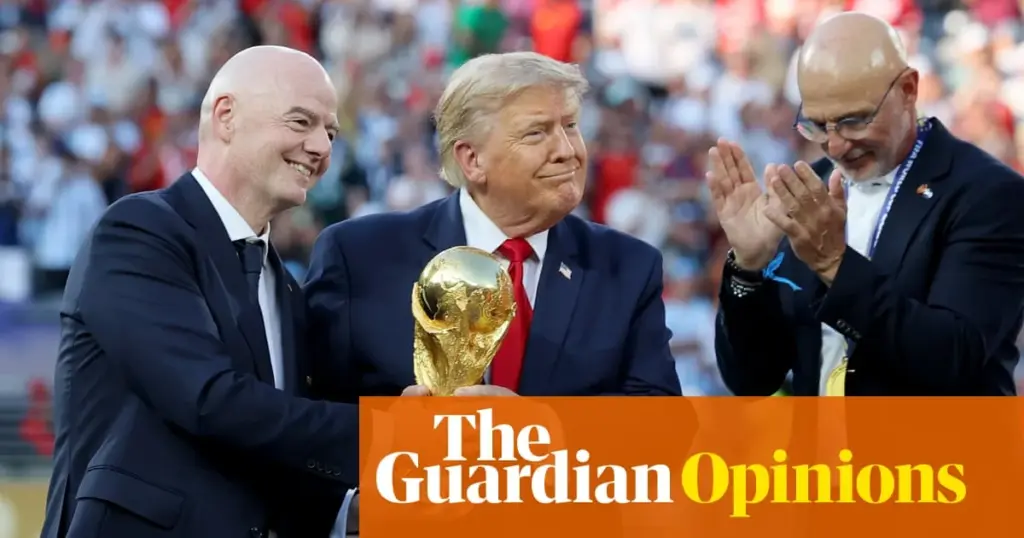
Uefa’s stance on Fifa’s proposals
Uefa, the governing body for European football, has stated that its 55 member associations have voted to boycott World Cups if Fifa proceeds with its plans to sell stakes in its competitions to private investors. This decision was made during an emergency meeting called to address proposals announced by Fifa, the world football governing body. Uefa had previously expressed strong opposition to these plans through two statements.
The proposed boycott would encompass all Fifa competitions, including the men’s and women’s World Cups and the Club World Cup. This action would be triggered if Fifa president Gianni Infantino’s proposals are approved by member associations. The first instance where this position could be tested is in October, when the Women’s World Cup play-offs are scheduled.
Following the meeting, Uefa released a statement asserting that it and its 55 member associations “stand as one.” The statement unequivocally rejected Fifa’s proposal to transfer ownership interests in the World Cup and other Fifa competitions to private investors, emphasising that the World Cup should not be treated as an investment product. It highlighted that the tournament is a significant sporting legacy, built over generations by players, national teams, and supporters globally, and should not be surrendered to private investors.
Fifa’s investment strategy and opposition
Fifa aims to establish a commercial subsidiary to manage its primary events, including the World Cup, allowing external investors to acquire stakes in this entity. Gianni Infantino reportedly wrote to all 211 Fifa member associations, indicating that they would receive $40m if they supported his plan to sell stakes in major competitions. He set a deadline of 19 September for football federations to accept his proposals to access an initial $20m.
In response, Uefa accused Fifa of utilising football to enrich individuals. Reports suggest that Fifa confirmed its intention to sell stakes in the World Cup and other tournaments to private investors, potentially including Joshua Kushner. These investors would reportedly invest in a new $20bn company, Fifa Forward Enterprise, which would handle all of Fifa’s commercial rights, including ticketing, and oversee the operational delivery of World Cups.
The prospect of private investment has raised concerns that investors’ desire to maximise revenues could accelerate the commercialisation of the World Cup. This could lead to pressure for more frequent and larger tournaments at both club and national levels, potentially disrupting the international game’s calendar and negatively impacting domestic leagues. Infantino has reportedly shown favour towards such expansion, despite objections from bodies like Uefa.
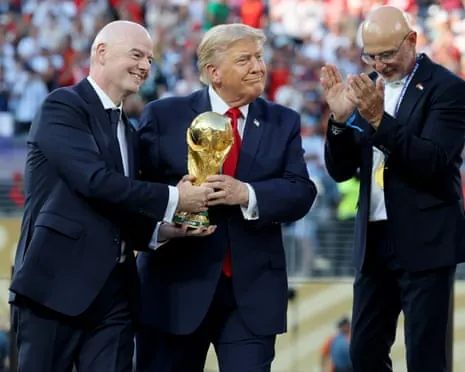
Innovations such as hydration breaks, which divide games into four quarters to allow for additional advertising slots, could become more common. This situation has revived concerns similar to those generated by the failed European Super League proposals, which faced significant opposition from football supporters in 2021. The opposition from Uefa and Concacaf, the equivalent body for North and Central America, suggests that the governance of football may be at a critical juncture.
Fifa’s primary role as the highest-level steward of the game is to safeguard football from entities that might exploit its appeal. However, under Infantino, it appears to be facilitating such exploitation. The visionary creator of the World Cup, Jules Rimet, intended for the tournament to foster unity and solidarity among nations. Despite Infantino’s verbal commitment to these ideals, his actions are perceived by some as moving the sport away from its foundational principles.
The Women’s World Cup play-offs in October will be the first test of Uefa’s boycott stance.
Source: bbc.com

